Artificial intelligence is transforming engineering education and professional engineering practice faster than curricula and professional development programs can adapt. Although a growing number of professionals and educators use generative artificial intelligence tools, this does not necessarily imply a deep understanding of their foundations, limitations, risks, or potential applications.
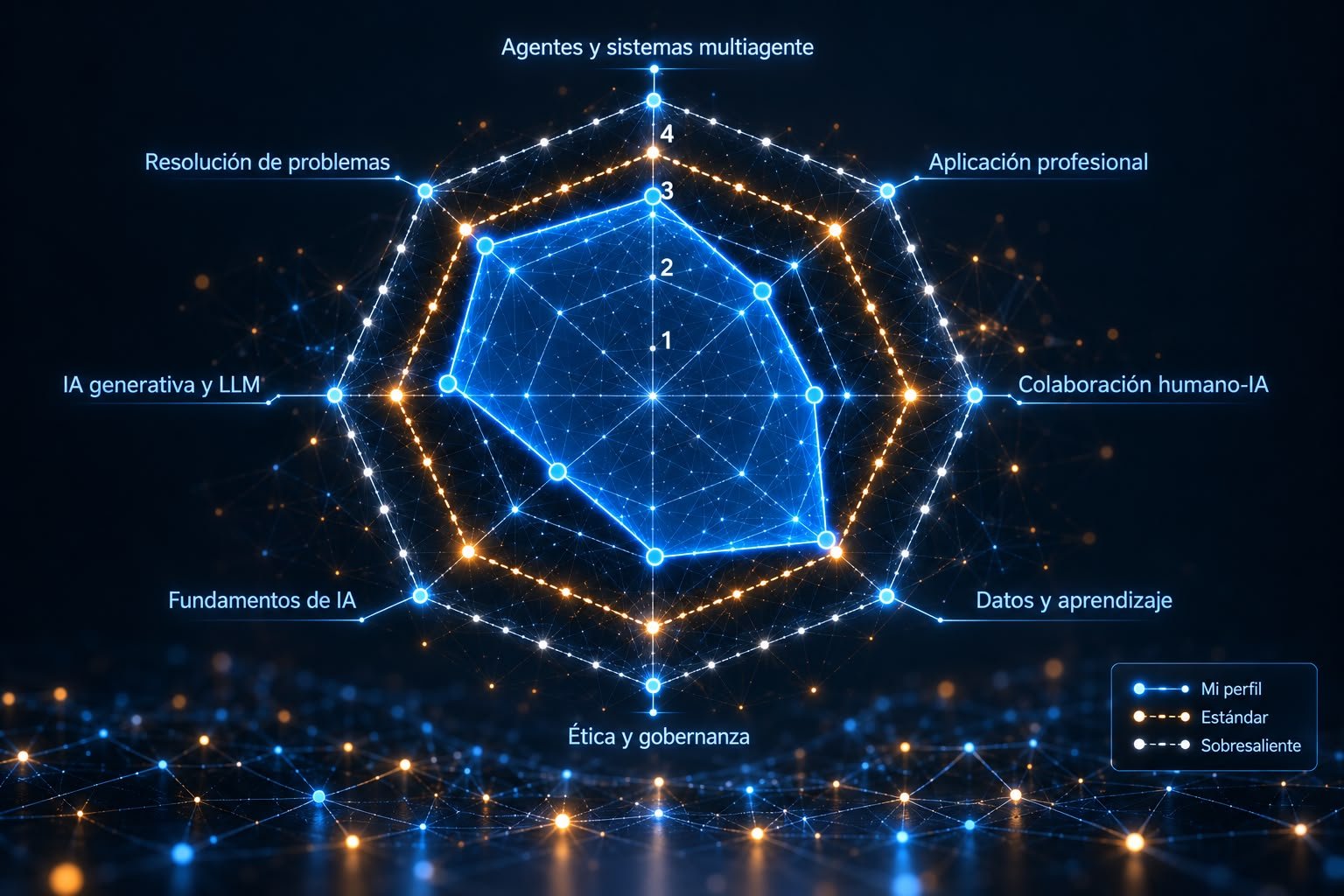
This project seeks to develop and validate a differentiated artificial intelligence competency framework for three complementary profiles: engineering professionals, computing and data science specialists, and engineering educators. The framework comprises nine competency dimensions, supported by checklists and rubrics with four proficiency levels, which make it possible to identify strengths and opportunities for development.
View the complete rubrics at AI Rubrics for Engineering Education.
The framework also includes an interactive version that allows users to complete an artificial intelligence competency assessment and identify areas they may wish to strengthen. If you would like to use it as an educator to create groups and gain an overview of your students’ competency levels, you can register as an educator.
If you prefer to complete your own assessment and voluntarily contribute to this research by sharing selected demographic information, such as your age group and level of education, you can register as a participant.
In either case, after signing in, you will be able to select the profile that best matches your education or professional activity—engineering, computing and data science, or teaching—and complete the corresponding assessment.
The usefulness of the results depends largely on the honesty and reflection with which the questionnaire is completed. This instrument is not intended to accredit or certify competencies. Instead, it provides a diagnostic snapshot of the respondent’s perceived competency level at the time of completion. Its purpose is to help identify strengths and opportunities for development and to provide a starting point for learning, professional development, and continuous improvement.
Given the dynamic nature of artificial intelligence and the rapid evolution of its technologies, applications, and challenges, both the framework and its assessment instruments will need to be reviewed and updated periodically.
Last updated: September 10, 2026